
E-bike security patrols.
A visible presence on an agreed route.
Explore bicycle-based security visits for suitable streets, estates and managed premises. The route, equipment, rider competence and local availability are checked before any offer of cover.
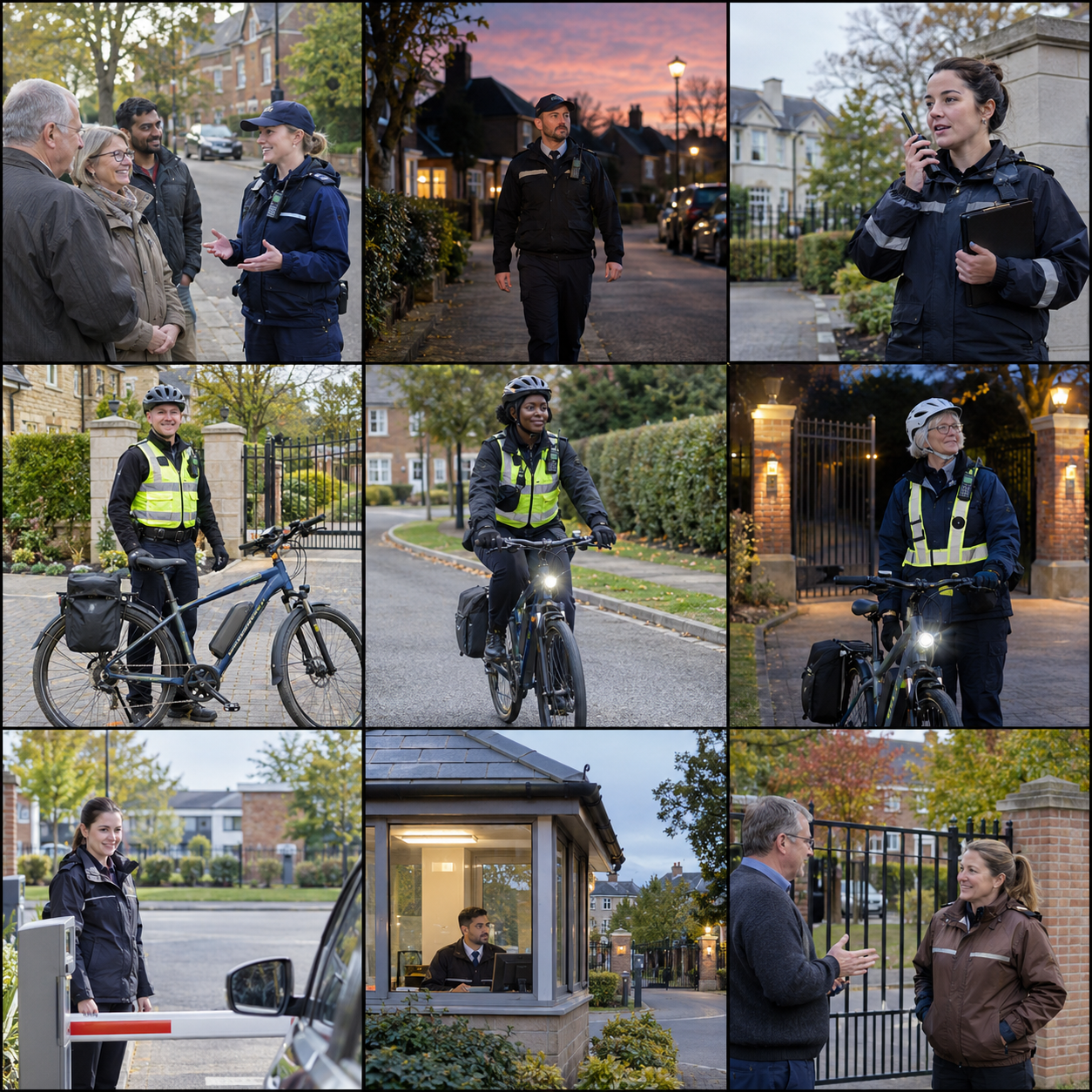
Use transport that fits the route.
A cycle patrol enquiry should identify entrances, stopping points, cycle access, surface conditions and where checks take place on foot. Riding between locations is different from observing a stationary gate. Agree where the bicycle can be secured while the officer carries out a visit.
Suitable equipment and a capable rider.
Specify a compliant pedal-assisted bicycle, lighting, helmet, practical uniform and communications. The organiser needs to review riding competence, shift demands, battery arrangements and safe charging. Photographs illustrate the proposed service; they do not show a currently live e-bike fleet.
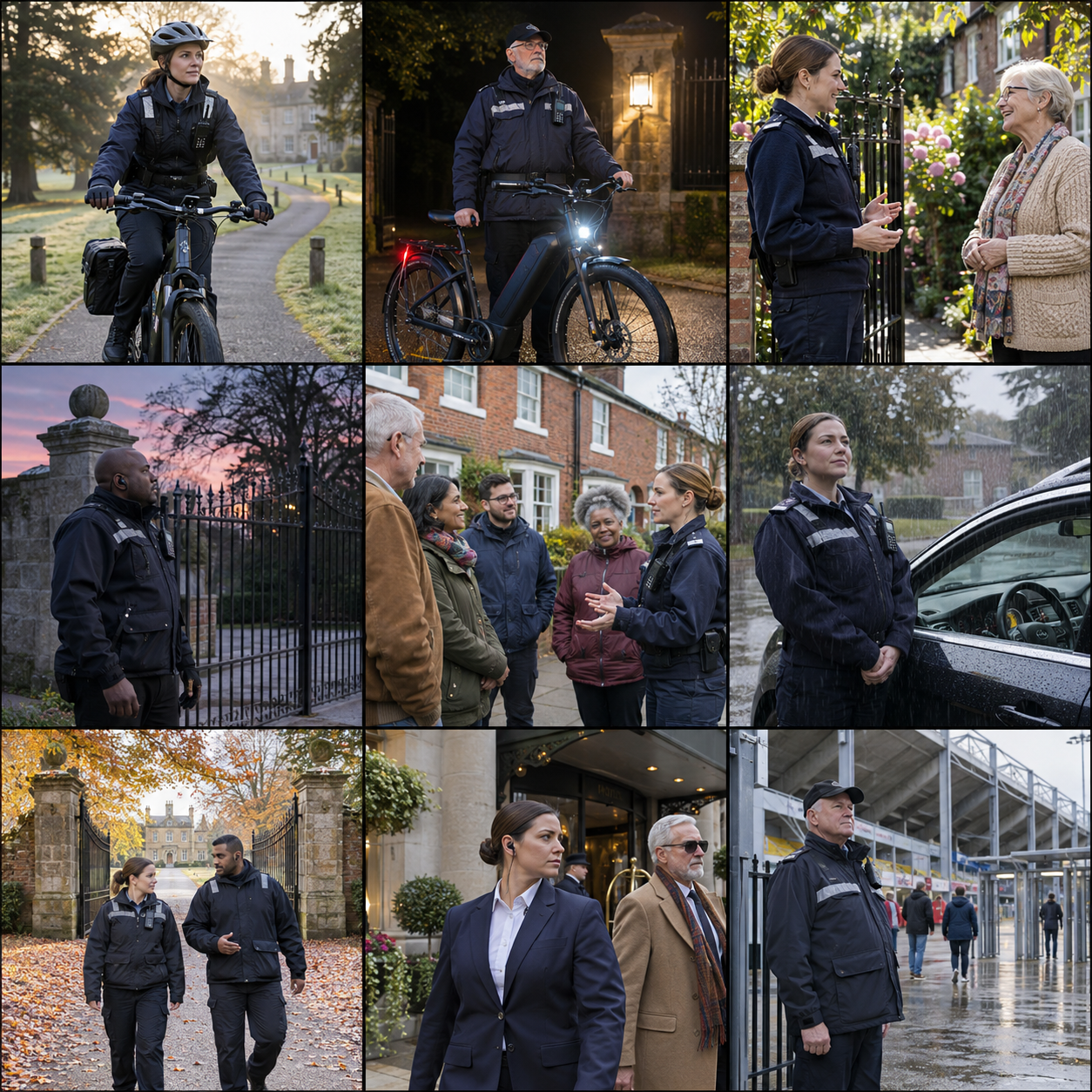
Road rules and site permission matter.
In Great Britain, an electrically assisted pedal cycle must meet the relevant rules, including usable pedals, a maximum continuous rated motor power of 250W and assistance cutting out at 15.5 mph. Pavement riding is not permitted. Private e-scooters are not offered for public-street patrols; a gated site also needs a specific access and suitability review.
Can I order an e-bike officer and assume immediate arrival?
No. Submit the postcode, route and hours for assessment. The organiser confirms suitable personnel, transport and deployment individually.
Are electric scooters an alternative for public-road security patrols?
Privately owned e-scooters cannot currently be used on public roads or pavements. Any private-land proposal needs the landowner’s permission and a separate review of lawful access and safe use.